
Electronic invoices are an important step towards more digital and efficient accounting processes. Yet in practice, problems keep arising that interrupt automated workflows and cause unnecessary delays.
Many of these errors can be avoided with a little attention and clear processes in place. In this article, we walk through the most common mistakes in e-invoicing and explain how companies and suppliers can prevent them.
Missing or incomplete mandatory fields
One of the most common reasons why electronic invoices cannot be processed correctly is missing mandatory information. This includes:
- Invoice number
- Invoice date
- Complete details of the invoice issuer and recipient
- Net amount, tax amount and gross total
If any of this information is missing or incomplete, the invoice can neither be checked automatically nor posted correctly.
Make sure all mandatory fields are fully completed in line with legal and system requirements. Standardised invoice creation templates help prevent gaps from occurring in the first place.
Wrong or unsupported invoice format
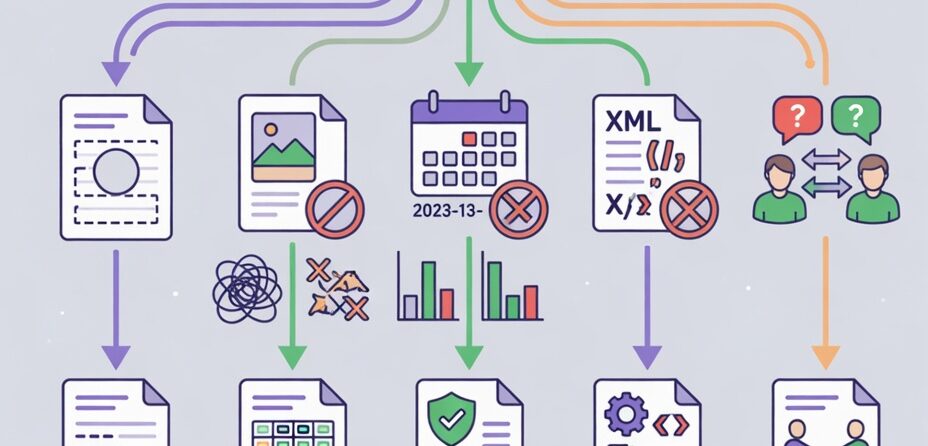
Not every electronic document is automatically a valid electronic invoice. Invoices are frequently submitted in formats that are either unstructured or incompatible with the receiving system. Particularly problematic:
- Image-only PDFs without structured data
- Incorrectly built XML files
- Formats that do not match the agreed standard
Clarify in advance which invoice formats are supported and communicate these requirements clearly to all parties involved. Structured formats allow for significantly more reliable processing.
Incorrect data formats and inconsistencies
Even small deviations can have a big impact. Typical examples include:
- Wrong date formats
- Inconsistent decimal separators
- Incorrect tax codes
- Conflicting amounts between line items and the total sum
Inconsistencies like these prevent invoices from being processed automatically.
Use validated templates or automated invoice creation systems. These ensure consistent data formats and significantly reduce the risk of errors.
Technical errors in XML files
Structured invoices – particularly those in XML format – can contain technical errors such as:
- Incorrectly closed tags
- Deviations from the required schema
- Invalid characters or empty required fields
These errors are often invisible to the human eye, but cause systems to reject the invoice outright.
XML invoices should be technically validated before sending. Many systems offer built-in validation mechanisms or schema checks for exactly this purpose.
Unclear communication with suppliers
A frequent but often underestimated source of errors is unclear or absent communication with suppliers. When invoice requirements are not defined unambiguously, error rates rise significantly.
Communicate clearly which invoice formats are accepted. Provide guidelines or checklists and make sure suppliers understand the most common mistakes and their consequences. Good alignment saves time and effort on both sides.
Conclusion: Fewer errors means faster processes
Electronic invoices offer enormous potential for more efficient workflows – provided they are correctly structured and complete.
Most errors don't stem from complex technology, but from unclear requirements, missing standards or small formal inaccuracies.
Companies that invest in structured formats, clean data and clear communication will reduce queries, avoid delays and lay the foundation for reliable, automated invoice processing.
